

Understanding the natural changes that occur in your eyes over time and the modern solutions available to help protect long-term vision.
Aging affects every part of the body, including the eyes. While many people expect a few vision changes as they get older, they are often surprised by how gradually these changes develop and how much they can impact everyday life. Reading small print becomes more difficult, night driving feels less comfortable, colors may appear less vibrant, and glare from headlights can suddenly become frustrating. These changes are common, but they should never be ignored.
The remarkable news is that modern eye care has advanced significantly. Today, patients have access to sophisticated diagnostic tools, preventive treatments, and surgical procedures that can help preserve vision and improve quality of life well into their later years. Understanding how aging affects the eyes allows patients to take proactive steps before vision problems begin interfering with work, hobbies, driving, and daily routines.
At Anaheim Eye Institute, patients receive comprehensive evaluations designed to identify age-related vision changes early and develop personalized treatment plans that support long-term eye health.
“Many age-related vision problems develop slowly, which is why routine eye exams become increasingly important over time.”
Why Vision Naturally Changes With Age
The eyes rely on delicate structures working together to process light and maintain clear focus. Over time, these structures gradually change, just like the joints, muscles, and skin elsewhere in the body.
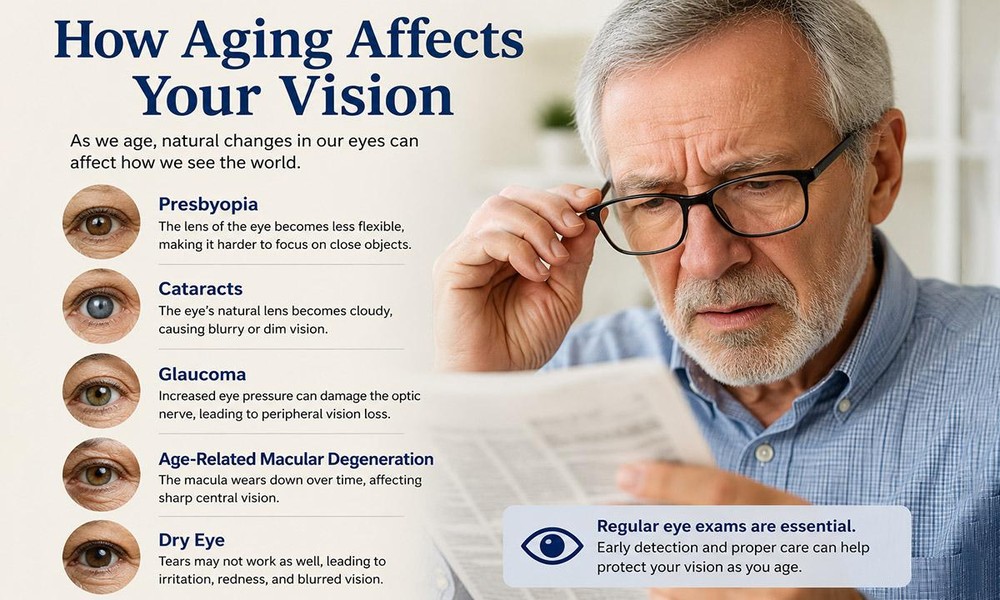
One of the earliest and most common changes is presbyopia, which typically begins during the early to mid-40s. The eye’s natural lens becomes less flexible, making it harder to focus on close objects. Patients often notice themselves holding reading materials farther away or relying more heavily on brighter lighting.
The tear film can also change with age, contributing to dry eye symptoms. Many older adults experience burning, irritation, fluctuating vision, or a gritty sensation because the eyes no longer produce tears as effectively.
Aging also affects the retina, optic nerve, and lens clarity. These changes increase the risk of developing conditions such as cataracts, glaucoma, and age-related macular degeneration.
While some changes are considered a normal part of aging, others require medical attention to prevent permanent vision loss. Early detection remains one of the most important factors in preserving healthy eyesight.
Common Age-Related Eye Conditions
Cataracts are among the most common vision conditions associated with aging. They occur when the eye’s natural lens gradually becomes cloudy, leading to blurry vision, increased glare sensitivity, faded colors, and difficulty seeing at night.
Many patients describe cataracts as feeling like they are constantly looking through a foggy window. Cataracts often progress slowly, which is why patients may not realize how much their vision has declined until treatment significantly improves it.
Glaucoma is another serious condition that becomes more common with age. Often called the “silent thief of sight,” glaucoma damages the optic nerve, frequently without noticeable symptoms during the early stages. Without treatment, it can lead to permanent peripheral vision loss and eventually blindness.
Age-related macular degeneration affects the central part of the retina responsible for detailed vision. Patients may notice distorted lines, blurry central vision, or difficulty recognizing faces. Early diagnosis is essential because certain forms of macular degeneration respond better to treatment when caught quickly.
Dry eye syndrome also becomes increasingly common with age, especially among postmenopausal women and individuals who spend extended time on digital devices.
Lifestyle Habits That Help Protect Aging Eyes
While aging itself cannot be stopped, many lifestyle habits can help support healthier vision over time.
Nutrition plays a major role in eye health. Diets rich in leafy greens, colorful vegetables, omega-3 fatty acids, and antioxidants may help support retinal health and reduce inflammation. Hydration is equally important for maintaining a healthy tear film.
UV protection is another critical factor. Years of sun exposure may contribute to cataract formation and retinal damage. Wearing high-quality sunglasses with UV protection can help reduce long-term exposure.
Smoking significantly increases the risk of multiple eye diseases, including cataracts and macular degeneration. Quitting smoking remains one of the most impactful decisions patients can make for both their vision and overall health.
Managing chronic health conditions like diabetes and hypertension is also essential because these conditions can directly damage blood vessels inside the eyes.
Patients should also prioritize screen breaks and proper lighting to reduce digital eye strain, particularly as aging eyes become more sensitive to fatigue and dryness.
“Healthy vision after 40 often depends as much on prevention as it does on treatment.”
Modern Treatments for Age-Related Vision Changes
The field of ophthalmology continues to evolve rapidly, giving patients more treatment options than ever before.
Prescription glasses and contact lenses remain effective solutions for many vision changes, particularly presbyopia. However, some patients eventually seek alternatives that reduce dependence on corrective lenses.
LASIK may still be appropriate for select patients depending on their eye health and vision goals, although age-related changes like cataracts can alter candidacy over time.
Cataract surgery is now one of the safest and most successful procedures performed in medicine. Modern intraocular lenses can often correct multiple vision problems simultaneously, helping many patients achieve clearer vision with reduced reliance on glasses.
Glaucoma treatments have also expanded significantly, including advanced laser procedures like Voyager™ DSLT and minimally invasive glaucoma surgeries designed to reduce eye pressure more effectively.
Patients with dry eye syndrome may benefit from prescription drops, thermal therapies, punctal plugs, or customized treatment plans based on the underlying cause of their symptoms.
Why Routine Eye Exams Become More Important With Age
Many serious eye diseases progress quietly without obvious symptoms during the early stages. Patients often assume their vision is stable simply because they can still see relatively well day to day.
Comprehensive eye exams allow ophthalmologists to evaluate not only visual acuity but also retinal health, optic nerve function, eye pressure, and early structural changes that patients cannot detect on their own.
Adults over 40 generally benefit from more regular eye evaluations, especially if they have risk factors such as diabetes, high blood pressure, family history of eye disease, or previous vision problems.
Routine monitoring allows doctors to identify subtle changes early, when treatment is often most effective and less invasive.
FAQs
At what age do vision changes usually begin?
Many people begin noticing changes in near vision during their 40s due to presbyopia.
Are cataracts inevitable with aging?
Cataracts are extremely common with age, but the timing and severity vary from person to person.
How often should older adults have eye exams?
Most adults over 40 should schedule comprehensive eye exams every one to two years, depending on risk factors.
Can healthy habits really help protect vision?
Yes. Nutrition, UV protection, smoking cessation, and chronic disease management all play important roles in long-term eye health.
Schedule an Eye Evaluation at Anaheim Eye Institute
If you have noticed blurry vision, difficulty reading, increased glare, dry eyes, or other vision changes, a comprehensive eye exam can help identify the cause and determine the best treatment options. Anaheim Eye Institute provides advanced diagnostic technology and personalized eye care designed to help patients protect and preserve their vision at every stage of life. Schedule an appointment today to take a proactive approach to your long-term eye health.
